Sh2-129 & Ou4: The Challenge of Capturing the Faint Squid Nebula
Sh2-129, also known as the Flying Bat Nebula, is an emission nebula and a beautiful target for astrophotography. It is especially famous because of Ou4, the Squid Nebula, which lies within it. When we capture the H-alpha emission of Sh2-129, we can see a huge red nebula structure. Its shape resembles the two wings of a flying bat, which is why it has been given the nickname “Flying Bat Nebula.” But what makes this target even more interesting is what lies inside it—the Ou4 Squid Nebula.
For astrophotographers shooting Sh2-129, Ou4 is the main challenge. Ou4 is an extremely faint OIII-emission nebula, and it usually appears in images as a blue or blue-green squid-shaped structure. This creates a fascinating combination: Sh2-129 as the red Bat and Ou4 as the blue Squid. If you can capture both clearly in a single image, you can produce one of the most beautiful versions of SH2-129. The main structure of Sh2-129 is an emission nebula with strong H-alpha emission. Because of this, using an Ha filter or a dual-band filter makes it relatively easy to capture the red structure of the Flying Bat Nebula.
However, the Ou4 Squid Nebula inside it is a very faint nebula dominated by OIII emission. Therefore, revealing its signal clearly requires both longer individual exposures and a large amount of total integration time. In other words, the main challenge of shooting SH2-129 + OU4 is not simply capturing the red structure of Sh2-129, but revealing the extremely faint OIII signal of OU4 that is almost hidden within it. With a mono camera, you can use narrowband filters such as Ha, SII, and OIII separately and capture each channel individually. One major advantage is that you can use a dedicated OIII filter, allowing you to collect Ou4’s weak OIII signal more efficiently. With an OSC (one-shot color) camera, however, things become a little more challenging. Because an OSC camera uses a Bayer color filter array, it can capture OIII emission, but it cannot utilize the entire sensor as efficiently for OIII as a dedicated mono camera can. In addition, some dual-band filters designed for OSC cameras may have strong Ha transmission but different bandwidth, transmission, and light-pollution-rejection characteristics on the OIII side, making it more difficult to bring out a faint OIII signal.
Therefore, when shooting an OIII-faint target like Ou4 with an OSC camera, filter selection becomes extremely important. Even after investing a large amount of integration time, you may still find that the OIII signal is not as strong as you expected—just like what happened to me. This is where filters such as Optolong L-Synergy become particularly interesting for OSC astrophotography. L-Synergy is designed to capture Ha, SII, and OIII emissions, making it very useful for targets like Ou4 where the OIII signal is extremely faint. With an OSC camera, it can help collect more useful OIII data. However, that does not mean that OU4 suddenly becomes easy to capture simply by using one filter. To reveal Ou4 clearly, many factors are important—not only filter selection, but also total integration time, sky transparency, Moon conditions, guiding, calibration, and processing. That is why I consider SH2-129 + OU4 to be a particularly interesting challenge for OSC astrophotographers. In my opinion, the real challenge of this target is not capturing the Ha structure of the “Flying Bat,” but seeing how much of the faint OIII signal from the “Squid” you can actually reveal.
For the images in this post,
The first image was captured using an OSC camera with an Optolong L-eNhance filter. In this image, the Ha signal is clearly dominant, while the OIII signal is only strong enough to reveal very faint outlines around Ou4. The total integration time was approximately 15 hours.
The second image is a combination of approximately 15 hours of L-eNhance data and 25 hours of L-Synergy data. In this image, Ou4 in the center is much more clearly visible. One thing I noticed is that because L-Synergy captures Ha, SII, and OIII emissions, the OIII data can be utilized much more effectively than with the L-eNhance data alone. As a result, the final image is no longer overwhelmingly dominated by the Ha signal. More importantly, the OIII structure of OU4 in the central region becomes much easier to distinguish.
The third image was captured using only the L-Synergy filter, with approximately 53 hours of total integration time. The only thing I can complain about with those 53 hours is that it took me almost two months to collect all of that data because of the weather conditions. On top of that, the data was captured under quarter-Moon conditions. At first glance, the appearance of Ou4 may not look dramatically different from the second image. However, when looking more closely at the details, you can see that its outer boundaries, surrounding OIII signal, and the signal within the main body have become more pronounced.
The fourth image was also captured using only the L-Synergy filter, with a total integration time of around 108 hours. The entire imaging process took nearly four months, mainly because of the weather, as usual. Another reason was that I deliberately chose to shoot only during the new Moon periods. By sticking to new Moon periods, I was able to obtain the strongest OIII signal from OU4 among all the SH2-129 + OU4 images I have captured so far. For that reason alone, I feel that all the time and effort I invested in this project were absolutely worth it…..
Clear skies and happy observing…..
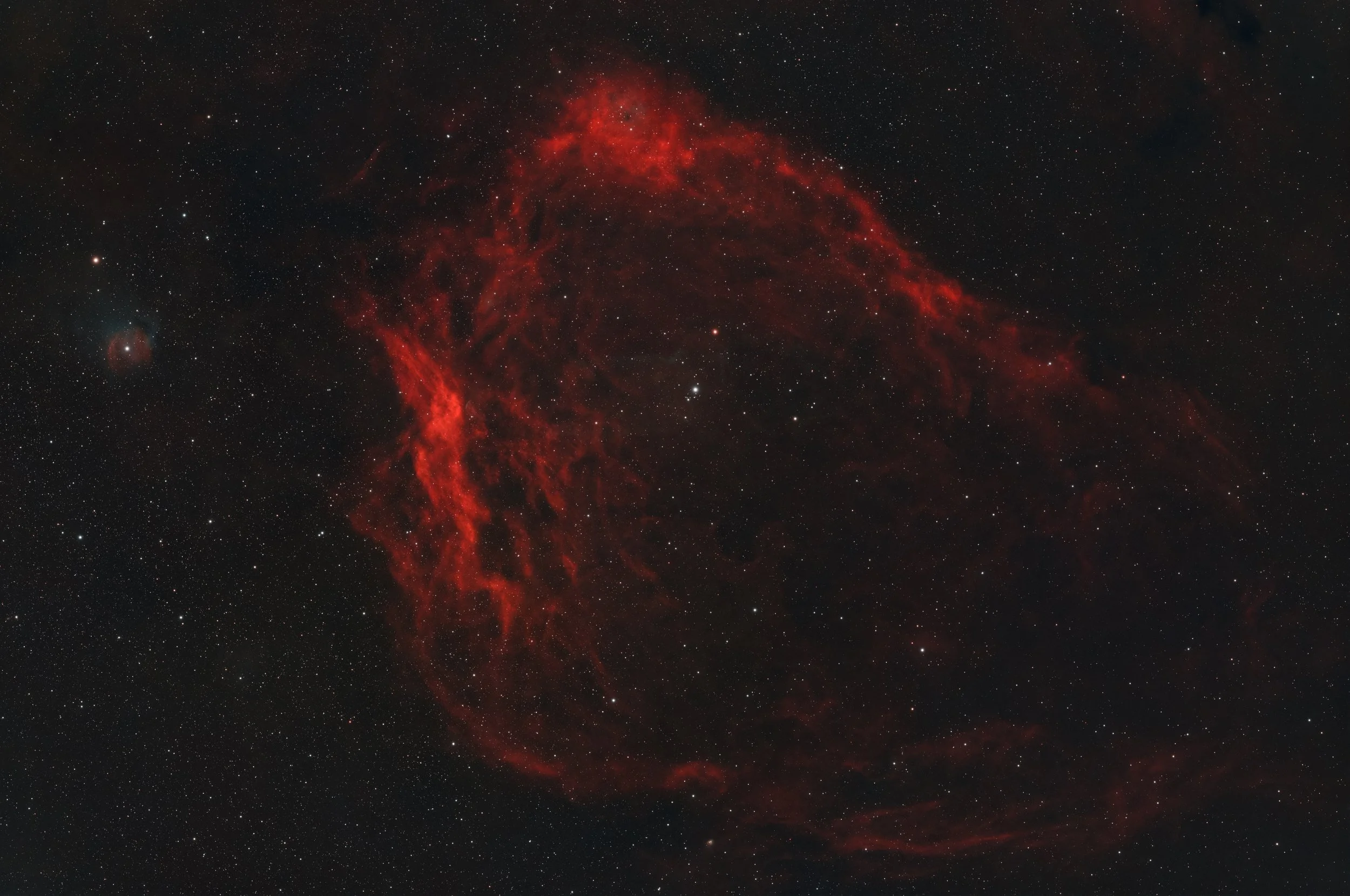
15 hours integration time
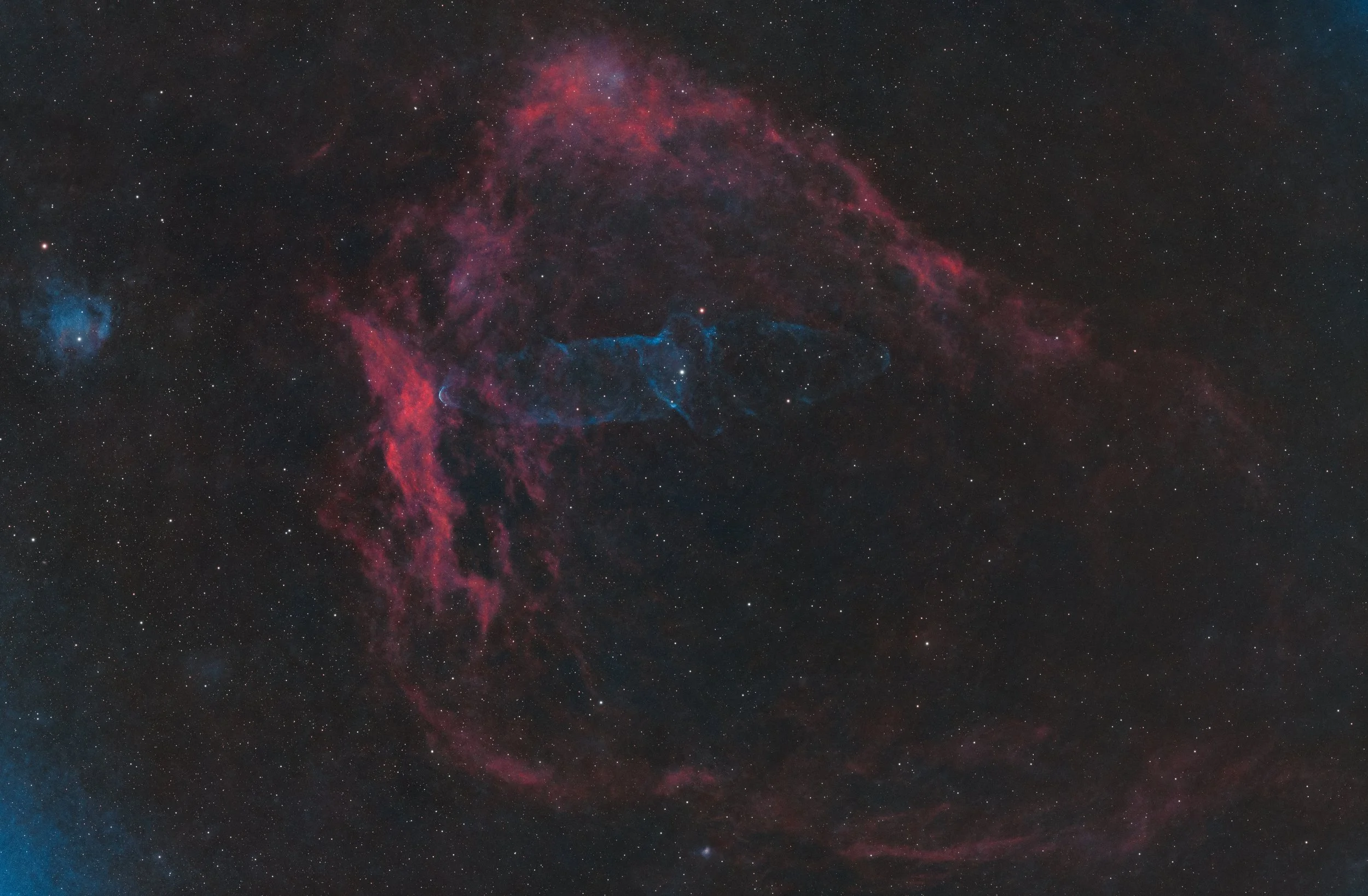
40 hours integration time
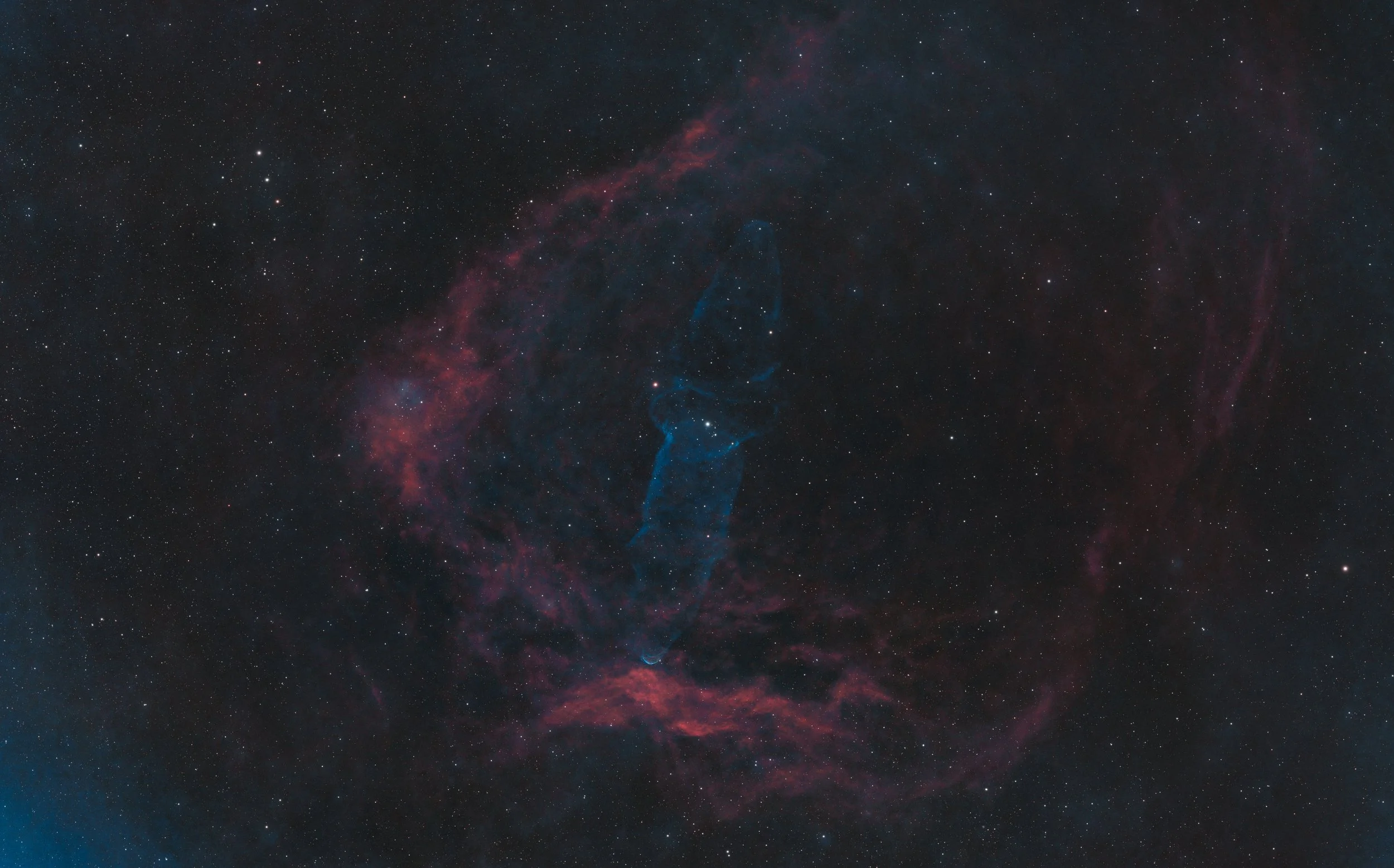
53 hours integration time
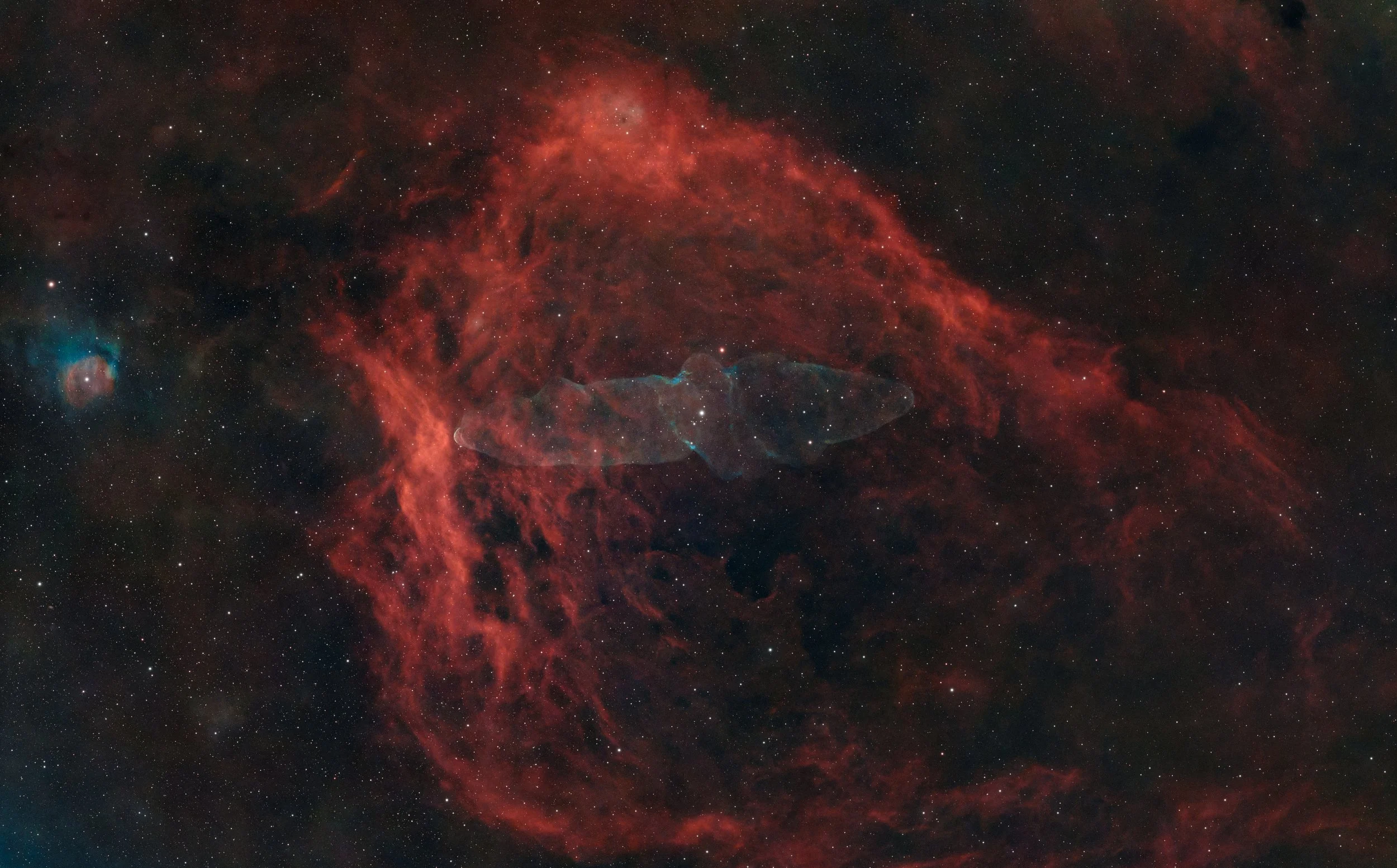
108 hours integration time
Sh2-129 လို့ခေါ်ကြတယ့် Flying Bat Nebula ဟာ emission nebula တစ်ခုဖြစ်ပြီး astrophotography အတွက်တော့အရမ်းလှတယ့် target တစ်ခုပါပဲခင်ဗျ။ အထူးသဖြင့် သူ့ရဲ့အတွင်းမှာရှိတယ့် Ou4 (Squid Nebula) ကြောင့်ပိုပြီးနာမည်ကြီးပါတယ်။ SH2-129 ရဲ့ H-alpha emission ကိုဖော်ထုတ်လိုက်ရင် အနီရောင် nebula structure ကြီးတစ်ခုကို မြင်ရမှာဖြစ်ပါတယ်။ ပုံစံက ပျံနေတဲ့ လင်းနို့ (Bat) ရဲ့ အတောင်နှစ်ဖက်လိုမျိုး ဖြစ်နေလို့ Flying Bat Nebula လို့ nickname ပေးထားတာပါ။ ဒါပေမယ့် သူ့ထက်ပိုစိတ်ဝင်စားစရာကောင်းတာက အဲ့ဒီ Bat Nebula အတွင်းမှာရှိပါတယ်။ အဲ့အရာကတော့ Ou4 (Squid Nebula) ပါပဲ။
Sh2-129 ကိုရိုက်တဲ့ astrophotographer တွေအတွက် Ou4 က အဓိက challenge ပါ။ Ou4 ဟာ OIII emission အရမ်းအားနည်းတဲ့ nebula ဖြစ်ပြီး ပုံထဲမှာ အပြာ/ပြာစိမ်းရောင် squid ပုံစံနဲ့ ပေါ်လာတတ်ပါတယ်။ အဲဒါကြောင့် Sh2-129 = အနီရောင် Bat နဲ့ Ou4 = အပြာရောင် Squid ဆိုတဲ့ စိတ်ဝင်စားစရာကောင်းတယ့် combination target တစ်ခုဖြစ်လာခြင်းပါပဲခင်ဗျ။ ဒီနှစ်ခုကို တစ်ပုံတည်းမှာ ထင်ရှားအောင်ဖမ်းနိုင်ရင် SH2-129 ရဲ့ အလှဆုံး version တစ်ခုရပါတယ်။ Sh2-129 ရဲ့ main structure က H-alpha emission အားကောင်းတဲ့ emission nebula ပါ။ ဒါကြောင့် Ha filter ဒါမှမဟုတ် dual-band filter သုံးမယ်ဆိုရင် Flying Bat Nebula ရဲ့ အနီရောင် structure ကို အတော်လေးလွယ်လွယ်ကူကူ ဖမ်းယူနိုင်ခြင်းဖြစ်ပါတယ်။
ဒါပေမယ့် သူ့အထဲမှာရှိတဲ့ Ou4 Squid Nebula ကတော့ OIII emission ကို အဓိကထားတဲ့ အလွန်အားနည်းတဲ့ nebula တစ်ခုဖြစ်တာကြောင့် signal ကို ထင်ရှားအောင်ဖော်ထုတ်ဖို့ exposure time နဲ့ total integration time များများလိုအပ်ပါလိမ့်မယ်။ ဒါကြောင့် Sh2-129 + Ou4 ကိုရိုက်ကူးရခြင်းရဲ့ အဓိကစိန်ခေါ်မှုက Sh2-129 ရဲ့ အနီရောင် structure ကိုရဖို့ထက်၊ သူ့အတွင်းမှာ ပျောက်ကွယ်လုနီးပါးဖြစ်နေတဲ့ OU4 ရဲ့ faint OIII signal ကို ဘယ်လောက်အထိ ထုတ်ဖော်နိုင်မလဲဆိုတာ ဖြစ်တယ်လို့ ပြောလို့ရပါတယ်။ Mono camera နဲ့ရိုက်မယ်ဆိုရင် Ha, SII, OIII စတဲ့ narrowband filter တွေကို သီးခြားအသုံးပြုကာ channel တစ်ခုချင်းစီကို ရိုက်ကူးတာဖြစ်ပြီး အထူးသဖြင့် OIII အတွက် dedicated OIII filter အသုံးပြုနိုင်တာကြောင့် Ou4 ရဲ့ အားနည်းတဲ့ OIII signal ကို ထိရောက်စွာ စုဆောင်းနိုင်တာကအားသာချက်တစ်ခုပါပဲခင်ဗျ။ OSC (color camera) နဲ့ဆိုရင်တော့ အခြေအနေက နည်းနည်းပိုပြီး challenging ဖြစ်လာပါပြီ။ OSC camera မှာ Bayer color filter array ပါဝင်တာကြောင့် OIII signal ကိုလည်း capture လုပ်နိုင်ပေမယ့် dedicated mono OIII filter နဲ့ sensor pixels အားလုံးကို OIII အတွက်အသုံးချနိုင်သလိုမျိုး ထိရောက်မှုမရှိပါဘူး။ ထို့အပြင် OSC အတွက်အသုံးပြုတဲ့ dual-band filter တချို့မှာ Ha transmission ကောင်းပေမယ့် OIII ဘက်မှာ bandwidth၊ transmission နဲ့ light pollution rejection စတဲ့အချက်တွေကြောင့် faint OIII signal ကို ထုတ်ဖော်ရတာ ပိုခက်နိုင်ပါတယ်။
ဒါကြောင့် Ou4 လိုမျိုး OIII emission အားနည်းတဲ့ target ကို OSC နဲ့ရိုက်မယ်ဆိုရင် filter ရွေးချယ်မှုက အလွန်အရေးကြီးတယ့်အချက်တစ်ခုဖြစ်လာပြီး Integration time အများကြီးသုံးထားတာတောင် OIII signal က ကိုယ်မျှော်လင့်သလောက် မထွက်လာတာမျိုးကိုလည်း ကြုံတွေ့ရနိုင်ပါတယ် (ကျွန်တော့်လိုပေါ့ခင်ဗျာ)။ ဒီနေရာမှာ Optolong ရဲ့ L-Synergy လိုမျိုး filter တွေက OSC astrophotography အတွက် စိတ်ဝင်စားစရာကောင်းလာပါပြီ။ L-Synergy က Ha, SII နဲ့ OIII emission တွေကို capture လုပ်နိုင်အောင် ဒီဇိုင်းလုပ်ထားတာကြောင့် OIII signal အားနည်းတဲ့ OU4 လို target ကို OSC camera နဲ့ ရိုက်ကူးတဲ့အခါ OIII data ကို ပိုကောင်းကောင်းရရှိဖို့ အထောက်အကူအများကြီးပြုပါတယ်ခင်ဗျ။ ဒါပေမယ့် filter တစ်ခုတည်းကြောင့် Ou4 ကို လွယ်လွယ်ကူကူ ထုတ်နိုင်မယ်လို့တော့ မဆိုနိုင်ပါဘူး။ Ou4 ကို ထင်ရှားအောင်ဖော်ထုတ်ဖို့အတွက် filter ရွေးချယ်မှုအပြင် total integration time, sky transparency, Moon condition, guiding, calibration နဲ့ processing အားလုံးက အရေးကြီးပါတယ်။ အဲ့ဒါကြောင့် Sh2-129 + Ou4 ဟာ OSC astrophotography သမားတွေအတွက် အထူးစိတ်ဝင်စားစရာကောင်းတဲ့ challenge တစ်ခုဖြစ်ပြီး၊ “Flying Bat” ရဲ့ Ha structure ကို ဖမ်းယူတာထက် “Squid” ရဲ့ faint OIII signal ကို ဘယ်လောက်အထိ ထုတ်ဖော်နိုင်မလဲဆိုတာက ဒီ target ရဲ့ တကယ့် challenge လို့ ကျွန်တော်တော့မြင်မိပါတယ်ခင်ဗျ။
ဒီပိုစ့်မှာတင်ပေးထားတယ့်ပုံတွေမှာ ပထမဦးဆုံးပုံကတော့ OSC ကင်မရာကို Optolong L-eNhance filter သုံးပြီးရိုက်ထားပုံဖြစ်ပြီး ပုံမှာ Ha signal ကသာအဓိကအားကောင်းနေတာကိုတွေ့ရမှာဖြစ်ပြီး OIII signal ကတော့ Ou4 ရဲ့အနားသတ်လိုင်းတွေကို မှိန်မှိန်လေးသာတွေ့ရမယ့် အခြေအနေမှာပဲရှိနေတာကိုတွေ့ရမှာပါခင်ဗျ။ သူ့ရဲ့ရိုက်ကူးချိန်ကတော့ 15 hours ဝန်းကျင်လောက်ဖြစ်ပါတယ်။
ဒုတိယပုံကတော့ L-eNhance filter သုံးပြီး 15 hours လောက်ရိုက်ထားတယ့်ပုံနဲ့ L-Synergy filter သုံးပြီး 25 hours လောက်ရိုက်ထားတယ့်ပုံနှစ်ခုကိုပေါင်းပြီးထုတ်ထားတယ့်ပုံဖြစ်ပြီး အဲ့ပုံမှာတော့ အလယ်က Ou4 ကိုပိုပြီးသိသာထင်ရှားစွာမြင်တွေ့ရမှာပါ။ ဒီနေရာမှာ တစ်ခုသတိထားမိတာက L-Synergy က Ha, SII နဲ့ OIII emission တွေကို capture လုပ်ပေးတဲ့ filter ဖြစ်တာကြောင့် L-eNhance data တစ်ခုတည်းနဲ့ processing လုပ်ထားတဲ့ပုံထက် OIII signal ကို ပိုပြီးအသုံးချနိုင်လာတာကို တွေ့ရပါတယ်။ ဒါကြောင့် final image မှာ Ha signal တစ်ခုတည်းက အလွန်အမင်း dominance ဖြစ်နေတဲ့ပုံစံမျိုး မဖြစ်တော့ဘဲ၊ အထူးသဖြင့် အလယ်ပိုင်းက OU4 ရဲ့ OIII structure ကို ပိုပြီးခွဲခြားမြင်နိုင်လာတာပါ။
တတိယပုံကတော့ L-Synergy filter ကိုပဲသီးသန့်သုံးပြီး 53 hours လောက်ရိုက်ယူထားတယ့်ပုံဖြစ်ပါတယ်။ အဲဒီ 53 hours ရိုက်ကူးချိန်ကနှစ်လနီးပါးလောက်အချိန်ပေးလိုက်ရတာတစ်ခုပဲပြောစရာရှိတယ်။ ဘာဖြစ်လို့လဲဆိုတော့ ရာသီဥတုအခြေအနေတွေကြောင့်ပေါ့ခင်ဗျ။ နောက်ပြီးသူ့ကို Quarter Moon ရဲ့အလင်းရောင်အောက်မှာရိုက်ထားတာမို့လို့ Ou4 ရဲ့ပုံထွက်ကသာမန်ကြည့်လိုက်ရင်တော့ ဒုတိယပုံနဲ့သိပ်မကွာလှဘူးလို့ထင်ရပေမယ့် အသေးစိတ်ထပ်ပြီးလေ့လာကြည့်လိုက်ရင်တော့ သူ့ရဲ့အနားသတ်လိုင်းတွေရယ်၊ သူ့ပတ်ဝန်းကျင်က OIII signal တွေရယ်နဲ့ main structure body က signal မှာပိုပြီးသိသာထင်ရှားလာတာကိုတွေ့ရမှာဖြစ်ပါတယ်ခင်ဗျ။
စတုတ္ထပုံကလည်း L-Synergy filter ကိုပဲသီးသန့်သုံးပြီး 108 hours လောက်ရိုက်ယူထားတယ့်ပုံဖြစ်ပါတယ် ရိုက်ကူးချိန်ကလေးလနီးပါးလောက်ပါ။ ထုံးစံအတိုင်း ရာသီဥတုကြောင့်ပေါ့ခင်ဗျာ။ နောက်တစ်ချက်က လကွယ်ရက်တွေချည်းပဲရွေးပြီးရိုက်ထားတာမို့လို့ပါ။ လကွယ်ရက်တွေချည်းပဲရွေးပြီးရိုက်ထားတော့ ရိုက်ခဲ့တယ့် Sh2-129 + Ou4 ပုံတွေအထဲမှာ Ou4 ရဲ့ OIII signal အကောင်းဆုံးပုံတစ်ပုံအနေနဲ့တော့ရရှိလိုက်တော့ အဲ့တစ်ချက်တည်းနဲ့တင်ပဲ အချိန်အများကြီးပေးခဲ့ရတာက တန်ပါတယ်လို့ ကျွန်တော့်အနေနဲ့ယူဆမိပါတယ်.....
မိုးသားကင်းစင်ကြည်လင်သောညများ ဖြစ်ပါစေ — အမြင်ကောင်းများနှင့် အောင်မြင်သော observation များရရှိပါစေ.....