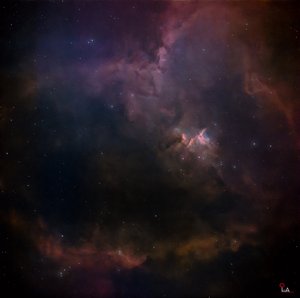
The Green Color Debate: Rethinking Pseudo-SHO
Last weekend, I went out to Sunol, not too far from my home, with a few fellow astrophotographers who share the same passion. Unfortunately, not long after we arrived at the shooting location, a lot of clouds rolled in. So, while we waited for the sky to clear, we spent our time exchanging experiences and asking each other about things we wanted to learn. Most of my friends were mainly talking about their gear, but I was more interested in asking about something I had been wanting to understand better—SHO editing.
The main question I asked was whether or not I should include green when editing images taken with an OSC camera to get an image that looks as close as possible to a true SHO image. Before answering my question, my friends asked me, “Why do you think green should not be included in the first place?” I told them that my answer might sound funny to them. I said that I had asked ChatGPT about it and had also done some research online, and I kept coming across people saying that green should not be present in astrophotography images. I also mentioned that while learning different PixInsight workflows, I had seen SCNR being used specifically to remove green from nebulae.
Then the other guys turned to the most experienced person among us and said, “Come on, Simon. You’re the teacher here. Please solve Lone’s problem for him.” Simon then said, “My brother, the truth is, it’s not that there is no green in space. Green absolutely exists, and there is plenty of evidence for it. To be completely honest, I still can’t figure out what kind of crazy person ever said that green should not be included in astrophotography images. So the first thing I want to tell you is: don’t follow that person’s mindset.”
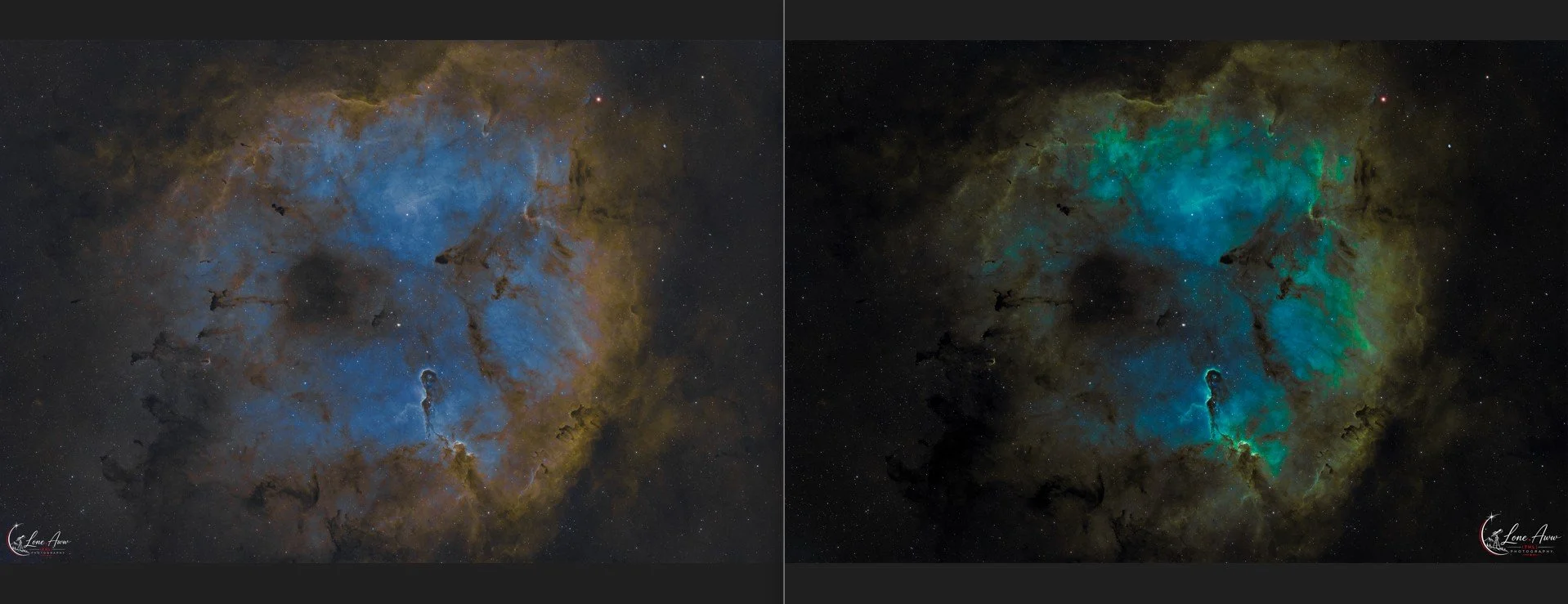
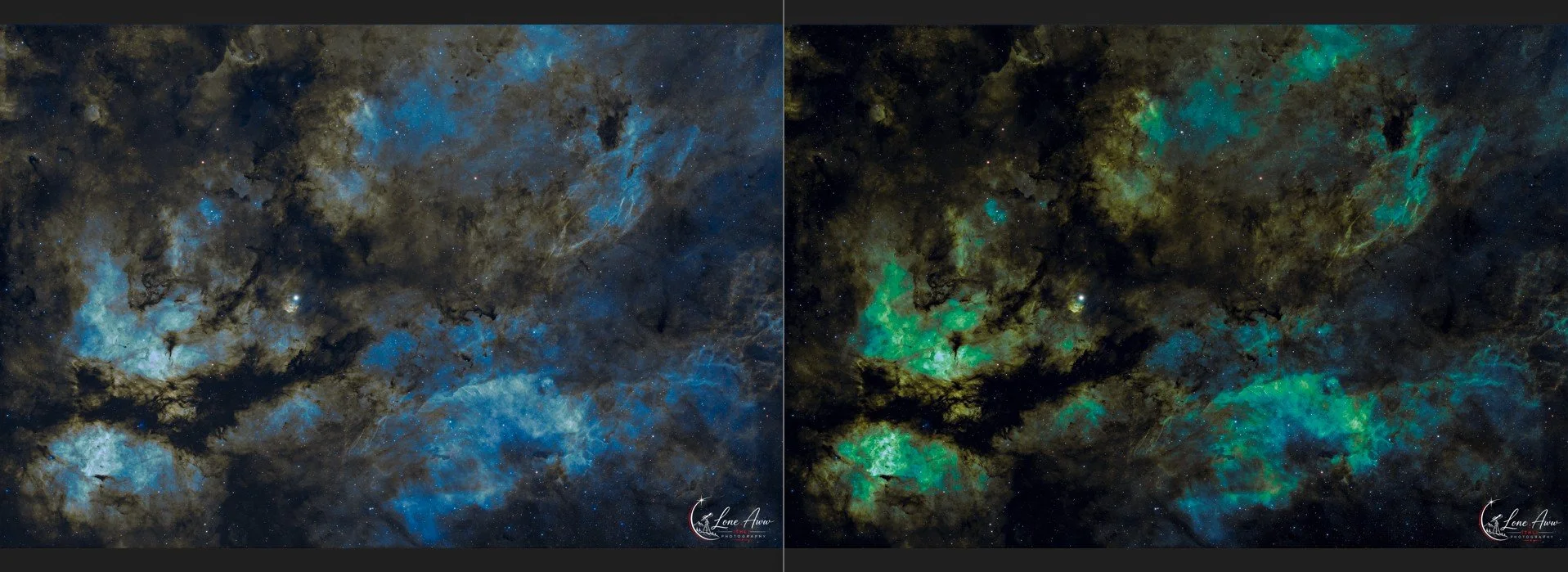
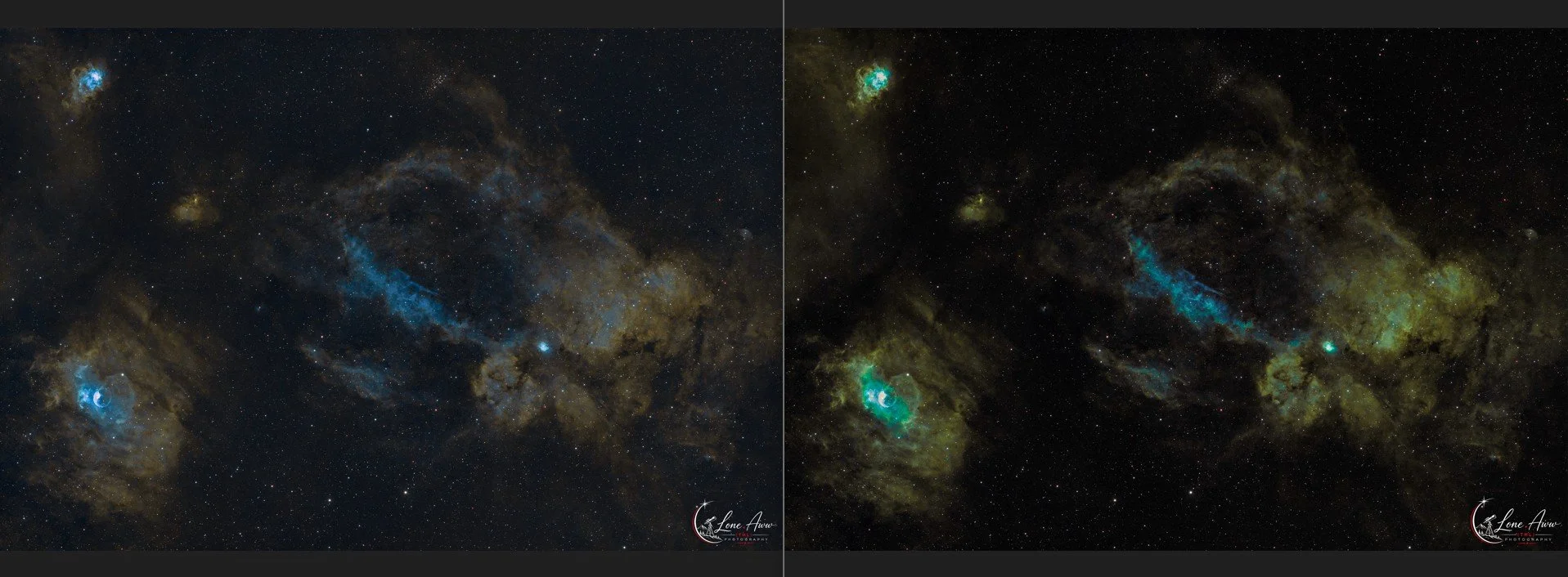
He explained that when editing images taken with a color camera (OSC), green can sometimes become overwhelming if it isn’t handled carefully, and that can ruin the overall look and color balance of an image. In his opinion, that advice was probably misunderstood and eventually turned into the idea that “green should not be there at all.” In reality, he said, having some green in the image can actually make it look better and can give the nebula a stronger sense of depth and a more three-dimensional appearance. He encouraged me to go home that night and try editing my images while allowing some green to remain. He said, “Once you try it yourself, you’ll understand what I mean.” The other guys also pointed out that because I was using an OSC camera, I could not produce a true SHO image in the same way as a dedicated monochrome SHO setup. However, they said that if I allowed green to remain in my editing, my Pseudo-SHO images could look remarkably close to true SHO images. In some cases, they said, people might even think the images had been taken with a mono camera.
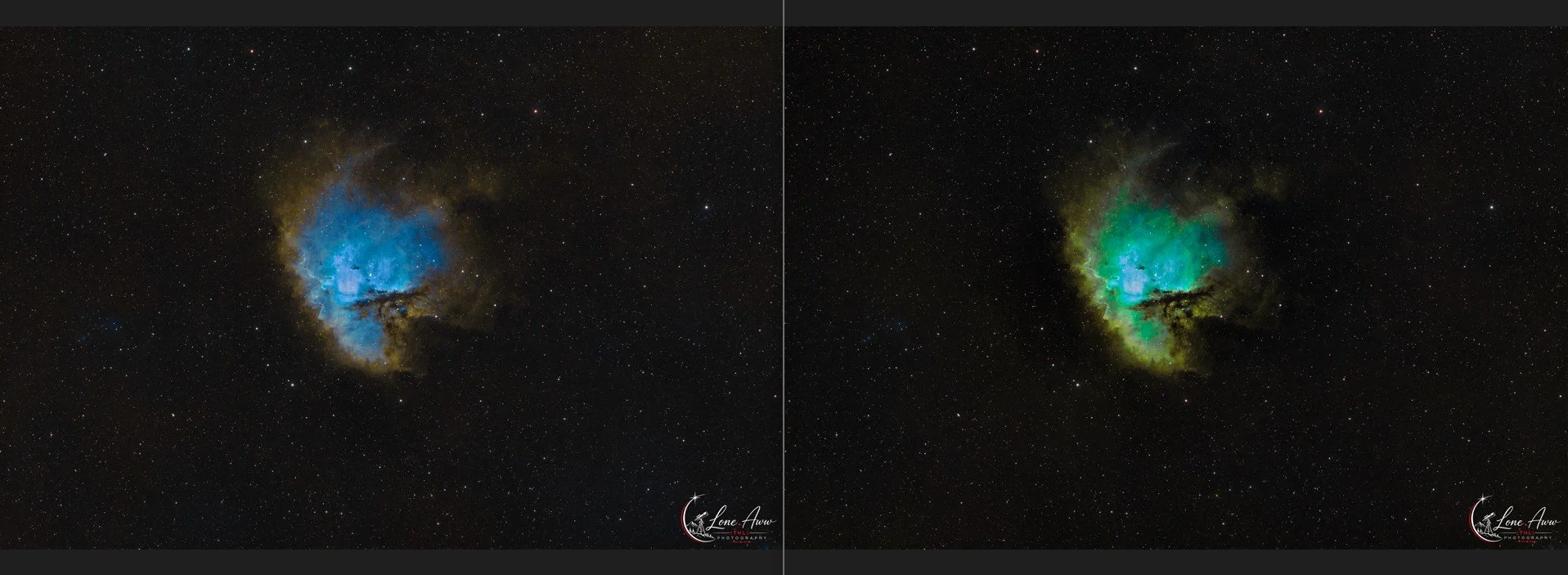
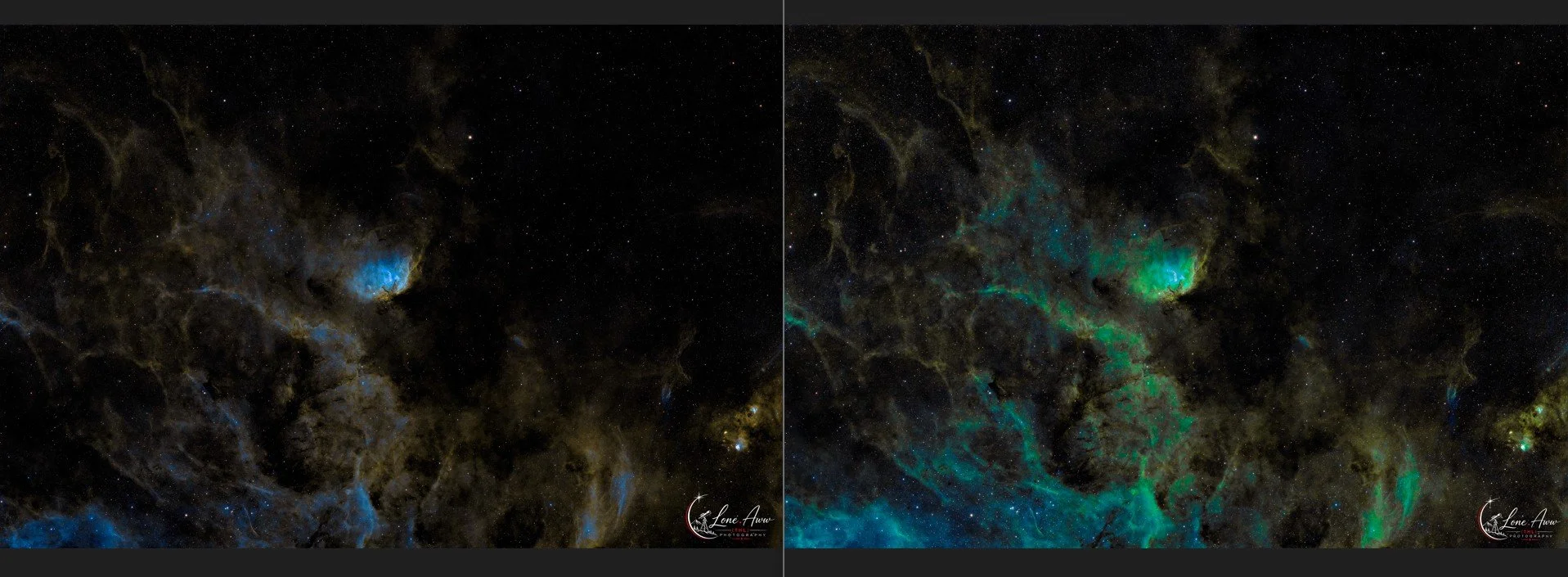
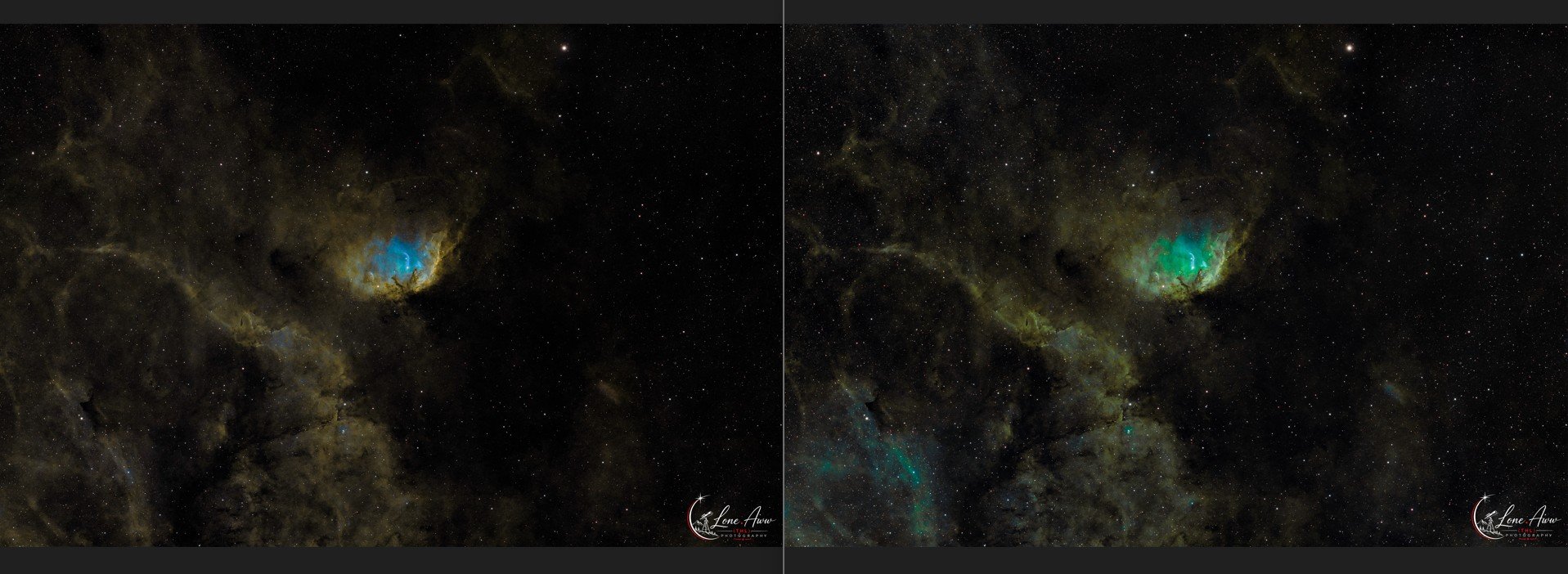
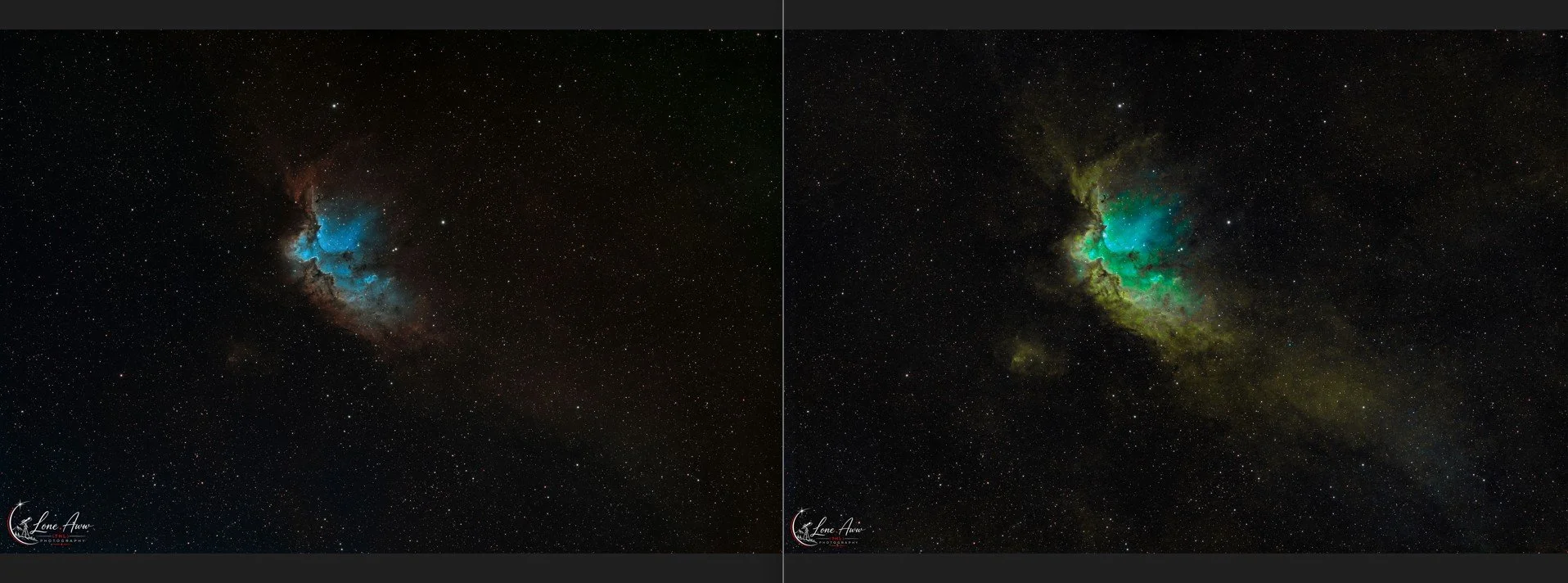
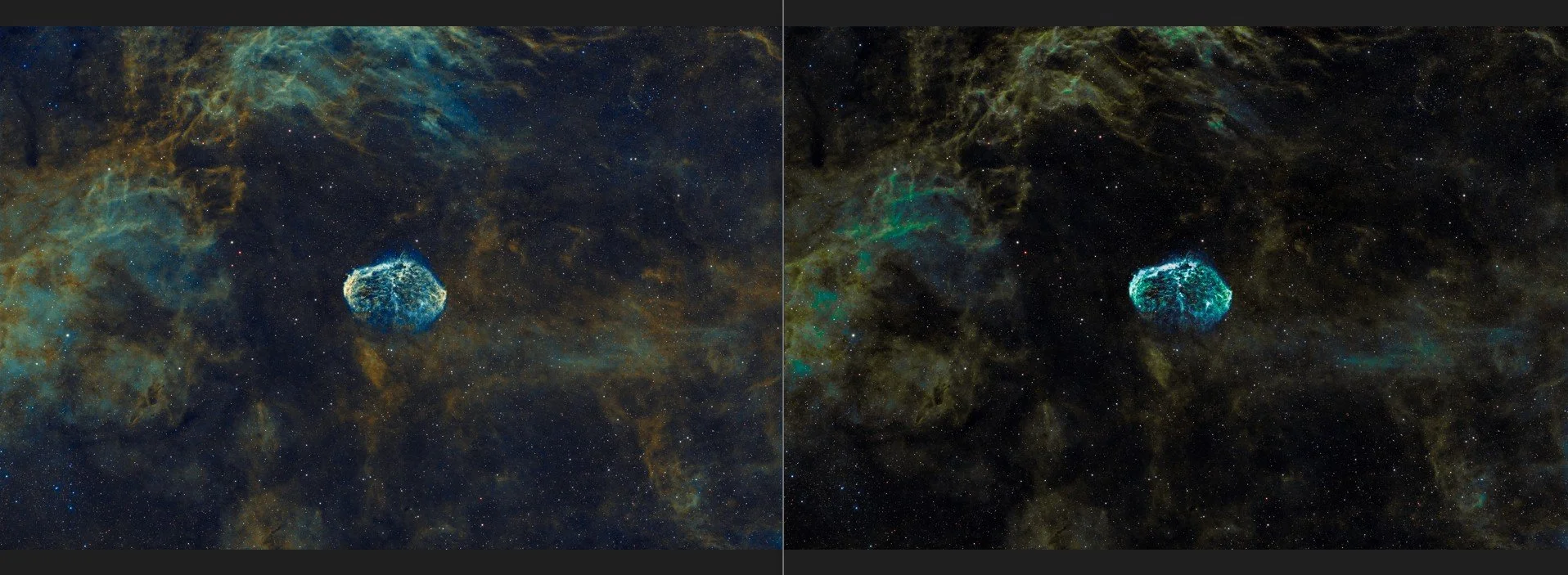
After that conversation, I started changing the way I edited my images. Instead of reducing green like I used to, I began leaving it at a similar level to the other colors and seeing how the images looked. And honestly, I started to understand exactly what my friends were talking about. The images looked better overall, and I could see a stronger three-dimensional effect. What I liked most was that more of the nebula's fine details seemed to come through. There was one small issue, though. In some images, the green became dominant over the blue, which made the blue less noticeable. Other than that, I was very satisfied with the overall results. I also noticed something else: because of the presence of green, the yellow tones I used seemed to move visually closer to the color palette of true SHO images.
While we're on the subject, there is something else I'd like to mention. One thing I really appreciate about many Western astrophotographers is that they generally don't hesitate to share experiences that they worked extremely hard to gain—experiences that may have cost them a great deal of time, effort, and money. They are also usually very open to hearing criticism and suggestions about their work. They don't look down on someone simply because they think, “You don't know as much as I do.” Even when they believe the other person's criticism or argument is incorrect, they will often listen until the person has finished speaking and then explain what they believe is correct using facts and evidence. I honestly think that's a wonderful attitude and a very admirable habit. I'm not saying there are no exceptions. Of course there are. But, in my experience, they seem to be a relatively small minority.
If I talk about my own experience, from Bird Photography, which I started with, to Macro Photography, and now to Astrophotography, I have encountered quite a few people from our own community—I'd say more than 60 percent, based on my personal experience—who seem to change their attitude as soon as you start calling them “teacher.” They start acting as though they have a certain status, become reluctant to accept what others say, and seem to hold on to the belief that what they learned must be the absolute truth. What I find even more disappointing is that when they encounter something that they themselves are unable to accomplish, instead of being happy for someone else and genuinely sharing in that person's success, they sometimes become jealous and even make sarcastic or indirect posts aimed at that person. To me, that kind of behavior is extremely unattractive.
Sometimes I honestly wonder whether this jealousy is something deeply rooted in our Burmese culture, or whether it is partly the result of shortcomings in the way we were educated and taught to think. Even now, I still don't know which one is the real answer.
Clear skies and happy observing…..
ပြီးခဲ့တယ့်အပတ် weekend တုန်းကဝါသနာတူ Astro photographer တစ်ချို့နဲ့အိမ်ကနေသိပ်မဝေးတယ့် Sunol ဖက်မှာဓာတ်ပုံသွားရိုက်ဖြစ်တယ်။ ဒါပေမယ့် ရိုက်မယ့်နေရာရောက်ပြီးသိပ်မကြာဘူး တိမ်တွေအများကြီးတက်လာလို့ တိမ်တွေကင်းစင်သွားတယ့်အထိထိုင်စောင့်နေရင်းနဲ့ အတွေ့အကြုံတွေဖလှယ်ဖြစ်ကြရင်း သိချင်တယ့်အကြောင်းအရာတွေကိုလည်းမေးဖြစ်ကြတယ်။ မိတ်ဆွေတော်တော်များများကတော့ gears တွေအကြောင်းကိုအဓိကပြောဆိုကြပေမယ့် ကျွန်တော်ကတော့ ကိုယ်သိချင်တယ့် SHO editing အကြောင်းကိုပဲအဓိကဇောင်းပေးပြီးမေးဖြစ်ခဲ့တယ်ဗျ။
အဓိကမေးဖြစ်တာကတော့ OSC Camera နဲ့ရိုက်ထားတယ့်ပုံတွေကို SHO ပုံထွက်မျိုးအနီးစပ်ဆုံးရအောင် edit လုပ်တယ့်အခါအစိမ်းရောင်ကာလာကိုထည့်ပြီးသုံးသင့်မသုံးသင့် ဆိုတယ့်အကြောင်းပါပဲ။ မိတ်ဆွေတွေက ကျွန်တော်မေးတယ့်မေးခွန်းကိုအဖြေပြန်မပေးခင် ဘာကြောင့်အစိမ်းရောင်ကိုထည့်ပြီး မသုံးသင့်ဘူးလို့ မင်းထင်မြင်ရတာလဲဆိုပြီးမေးခွန်းပြန်မေးပါတယ်။ ကျွန်တော်က ငါပြန်ပေးမယ့်အဖြေကမင်းတို့အတွက်ရီစရာဖြစ်ချင်လည်းဖြစ်နေမယ်လို့ပြောပြီး ငါ ChatGPT ကိုလည်းမေးတယ်နောက်ပြီး online ကနေလည်းလေ့လာကြည့်တော့ Astro photos တွေမှာအစိမ်းရောင်ကိုမထည့်သင့်ဘူးလို့ပြောပြောနေကြတာကိုအတွေ့များနေတာကြောင့်ပဲလို့ဖြေလိုက်တယ်လေ။ နောက်တစ်ခုက PixInsight ရဲ့ workflow ကိုလေ့လာသင်ယူတုန်းကလည်း သူ့မှာပါတယ့် SCNR နဲ့ Nebula မှာပါတယ့်အစိမ်းရောင်ကိုဖယ်ထုတ်ဖို့သင်ပေးနေတာကိုလည်း တွေ့ရတယ်လို့ထပ်ဆောင်းပြီးဖြေပေးလိုက်ပါသေးတယ်။
မိတ်ဆွေထဲက အတွေ့အကြုံအများဆုံးတစ်ယောက်ကိုကျန်တယ့်သူတွေက ကဲ "Simon" ငါ့ဆရာကပဲ "Lone" ရဲ့ပြဿနာကိုဖြေရှင်းပေးလိုက်ဖို့တောင်းဆိုပါတယ်လို့ဝိုင်းပြောလိုက်လို့ "Simon" က ကဲငါ့ညီ အမှန်တော့အာကာသထဲမှာအစိမ်းရောင်မရှိဘူးဆိုတာမဟုတ်ပါဘူး အစိမ်းရောင်ကရှိပြီးသားပါ ရှိတယ်ဆိုတယ့်သက်သေတွေလည်းအများကြီးပါ။ ငါအမှန်တိုင်းဝန်ခံရရင် ဘယ်အရူးကအာကာသဓာတ်ပုံတွေထဲမှာ အစိမ်းရောင်ကိုမထည့်ရဘူးလို့ပြောခဲ့တယ်ဆိုတာကို ငါအခုထိစဥ်းစားလို့ကိုမရဘူးကွ။ အဲဒီတော့မင်းကိုလည်းအဲ့အရူးရဲ့ mindset နောက်ကိုမလိုက်ဖို့ပထမဆုံးပြောချင်တယ်ကွယ့်။
အဓိကကတော့ color camera (OSC) တွေနဲ့ရိုက်တယ့်ပုံတွေကို editing လုပ်တယ့်အခါအခန့်မသင့်ရင် အစိမ်းရောင်က over cast ဖြစ်သွားနိုင်ပြီးပုံတစ်ခုလုံးရဲ့အရသာကို ပျက်စီးသွားစေနိုင်တာကြောင့် အစိမ်းရောင်ကိုသတိထားပြီးကိုင်တွယ်ဖို့ပြောတာကို တလွဲကောက်ပြီးအစိမ်းရောင်မပါသင့်ဘူးဆိုတာကြီးဖြစ်လာတာလို့တော့ ငါထင်တာပဲကွ။ အမှန်တော့အစိမ်းရောင်ပါလာတယ့်အတွက် ပုံကပိုပြီးကြည့်လို့ကောင်းလာပြီး 3D effect လည်းပိုဖြစ်လာတာလေ။ မင်းဒီညအိမ်ပြန်ရောက်ပြီး ရိုက်ထားတယ့်ပုံတွေကိုအစိမ်းရောင်ပါအောင် edit လုပ်ကြည့်ကွာမင်းသိလာပါလိမ့်မယ်လို့ တိုက်တွန်းပါတော့တယ်။ နောက်ပြီးမိတ်ဆွေတွေထပ်ပြီးပြောတာက OSC camera နဲ့ရိုက်တာမို့လို့ True SHO ပုံမျိုးမရနိုင်ပေမယ့် မင်းအစိမ်းရောင်ကိုပါအောင်သုံးတယ့်အခါ မင်းရဲ့ Pseudo-SHO images တွေက True SHO နီးပါးလောက်ကိုကြည့်လို့ကောင်းလာလိမ့်မယ် တစ်ချို့သူတွေဆိုရင် mono camera နဲ့ရိုက်ထားတယ်လို့တောင်ထင်သွားနိုင်တယ်ကွ ဆိုတာပါပဲ။
ကျွန်တော်လည်းအဲဒီနောက်ပိုင်း editing လုပ်တယ့်အခါတိုင်းအရင်လိုမျိုး အစိမ်းရောင်ကိုမလျှော့ချပစ်တော့ပဲ တစ်ခြားအရောင်တွေကိုထားတယ့် ပမာဏအတိုင်းထားပြီး edit လုပ်ကြည့်တာ မိတ်ဆွေတွေပြောတယ့်အတိုင်း ပုံတွေကပိုပြီးကြည့်လို့ကောင်းလာသလို 3D effect လည်းပိုရလာတယ်လို့သိလာရပါတယ်။ ကျွန်တော်အကြိုက်ဆုံးတစ်ချက်ကတော့ Nebula ရဲ့ detail တွေပိုထွက်လာတာပါပဲ။ တစ်ချို့ပုံတွေမှာ အပြာရောင်ကိုအစိမ်းရောင်ကအများကြီးလွှမ်းမိုးသွားတာမို့လို့ အပြာရောင်သိပ်မပေါ်တယ့်ပြဿနာလေးအနည်းအကျဥ်းရှိတာကလွဲလို့ overall result တိုင်းကိုကျွန်တော်ကျေနပ်အားရပါတယ်။ နောက်ပြီးအစိမ်းရောင်ကြောင့် သုံးထားတယ့်အဝါရောင်ရဲ့ကာလာကလည်း True SHO ဖက်ကိုပိုနီးစပ်သွားတယ်လို့လည်း မြင်မိပါတယ်။
ကြုံကြိုက်တုန်းလေး ကျွန်တော်ပြောချင်တာလေးတစ်ခုက ဒီအနောက်တိုင်းကလူတော်တော်များများက သူတို့ခက်ခက်ခဲခဲနဲ့ အချိန်တွေငွေတွေအများကြီးရင်းနှီးပြီးမှရလာခဲ့တယ့် အတွေ့အကြုံတစ်ခုကိုဝေမျှဖို့ဘယ်တော့မှနှမြောတွန့်တိုစိတ်မရှိကြဘူးဆိုတာပါပဲခင်ဗျ။ နောက်ပြီးသူတို့ရဲ့အတွေ့အကြုံကိုဝေဖန်အကြံပြုတာတွေကိုလည်း လိုလိုလားလားနဲ့လက်ခံနားထောင်ပေးကြတယ် မင်းငါ့လောက်မသိပါဘူးကွာဆိုတယ့်စိတ်နဲ့တစ်ဖက်လူကိုဘယ်တော့မှမကြည့်တယ့်အပြင် even though တစ်ဖက်လူရဲ့ဝေဖန်ထောက်ပြချက်တွေကမှားနေပေမယ့်လည်း အဲ့ဒီလူရဲ့စကားကိုဆုံးတယ့်အထိလိုက်နားထောင်ပြီးမှ အမှန်ကိုအချက်အလက်ကျကျနဲ့ပြန်ပြီးထောက်ပြပေးကြတယ်လေ ဘယ်လောက်ချစ်ဖို့ကောင်းလိုက်တယ့် အလေ့အထတစ်ခုလည်းဗျာ။ စုန်းပြူးတွေမရှိဘူးလို့မဆိုလိုပါဘူး ရှိပါတယ် ဒါပေမယ့်လည်းရာခိုင်နှုန်းအနည်းစုလောက်ပါပဲ။
ကျွန်တော့်အတွေ့အကြုံကိုပြောရမယ်ဆိုရင် ပထမဦးဆုံးစရိုက်ခဲ့တယ့် Bird Photography ကစပြီး Macro Photography အလယ် အခု Astro Photography အဆုံးကြုံတွေ့ခဲ့ရတယ့်ကိုယ့်လူမျိုးတွေထဲကတစ်ချို့ (ရာခိုင်နှုန်းက 60 အထက်မှာပါ) ဆိုကိုယ်ကနေစပြီး ဆရာလို့ခေါ်လိုက်တာနဲ့ပဲ သူတို့မှာအထာကြီးတွေပေးပြီး ကိုယ်ပြောတာကိုလည်းလက်မခံချင်သလို သူတို့သိခဲ့တာတွေကမှအမှန်ဆိုပြီးတစ်ဖက်သတ်ကိုင်စွဲထားသလို ကိုယ်တိုင်ကလိုက်ပြီးလုပ်နိုင်တယ့်အင်အားမရှိတယ့်ကိစ္စတွေမျိုးမှာဆို သူတစ်ပါးကိုမုဒိတာပွားရမယ့်အစား မနာလိုစိတ်တွေဝင်ပြီး စောင်းမြောင်းရေးတယ့်ပိုစ့်တွေပါတင်တတ်တာကြီးက တော်တော်ကြီးကိုရုပ်ဆိုးလွန်းတယ်လို့မြင်မိပါတယ်ခင်ဗျ။
မနာလိုစိတ်ဆိုတာကြီးက ကျွန်တော်တို့မြန်မာလူမျိုးတွေရဲ့မွေးရာပါသန္ဓေစိတ်ကြီးပဲလား ဒါမှမဟုတ်သင်ကြားလာခဲ့ရတယ့် အတန်းပညာတွေရယ့်လိုအပ်ချက်တွေကြောင့်ပဲလားဆိုတာကိုတော့ ကျွန်တော်လည်းအခုချိန်အထိဝေခွဲလို့မရသေးပါ.....
မိုးသားကင်းစင်ကြည်လင်သောညများ ဖြစ်ပါစေ — အမြင်ကောင်းများနှင့် အောင်မြင်သော observation များရရှိပါစေ.....