Why Do Most Solar Imagers Prefer a Mono Camera?
The answer is clearly visible in these comparison images.
Even before applying extensive editing, the brightness, contrast, 3D texture, and fine details from the Mono Camera already stand out compared to the Color Camera.
The main reason is that a Mono Camera sensor does not have a Bayer Color Filter Array (CFA) in front of the sensor. This allows every pixel to capture all incoming photons directly, without the light loss caused by the color filters used in a Color Camera.
As a result, a Mono Camera offers higher sensitivity, a better Signal-to-Noise Ratio (SNR), and higher spatial resolution. These advantages make it possible to capture the Sun's surface texture, filaments, sunspots, and prominences with significantly greater clarity and finer detail.
For anyone who prioritizes maximum detail in solar imaging, a Mono Camera remains one of the best choices.
Unfortunately, I wasn't able to capture many great frames during this session. Instead of using a dedicated solar tracking mount, I tested the setup with a mount primarily designed for deep-sky imaging. The tracking drift resulted in fewer usable frames than I had hoped.
Even so, this test clearly demonstrates the advantage of a Mono Camera when it comes to revealing fine solar details.
I'll be testing again with a dedicated solar tracking mount soon, and I look forward to sharing even better results.
Clear skies and happy observing…..
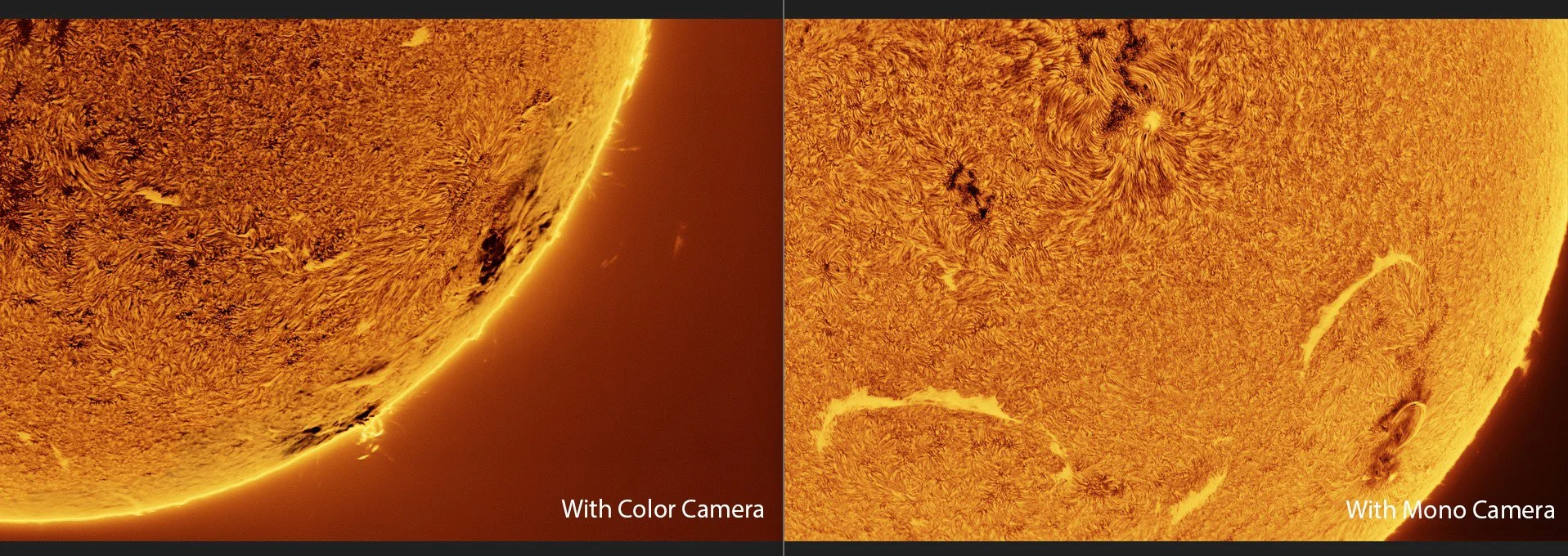
ဒီပုံနှစ်ပုံကို ယှဉ်ကြည့်လိုက်ရင် အဖြေကို ရှင်းရှင်းလင်းလင်း မြင်ရမှာဖြစ်ပါတယ်။
Editing ကို အများကြီး မလုပ်ရသေးခင်ကတည်းက brightness, contrast, 3D texture နဲ့ fine details တွေက Color Camera ထက် သိသိသာသာ ပိုကောင်းနေတာကို တွေ့ရမှာပါ။
အဓိကအကြောင်းရင်းကတော့ Mono Camera sensor ရဲ့ရှေ့မှာ Bayer Color Filter Array (CFA) မရှိတာကြောင့် ဖြစ်ပါတယ်။ Pixel တစ်ခုချင်းစီက သူ့ဆီရောက်လာတဲ့ photons တွေကို တိုက်ရိုက်လက်ခံနိုင်တဲ့အတွက် Color Camera လို color filter ကြောင့် ဖြစ်ပေါ်တဲ့ အလင်းဆုံးရှုံးမှု မရှိသလောက်ပါပဲ။
ဒါကြောင့် higher sensitivity, ပိုကောင်းတဲ့ Signal-to-Noise Ratio (SNR) နဲ့ ပိုမြင့်တဲ့ spatial resolution ကို ရရှိစေပြီး နေရဲ့ surface texture, filaments, sunspots နဲ့ prominences တွေကို ပိုပြီး ကြည်လင်ပြတ်သားစွာ ဖမ်းယူနိုင်ခြင်းဖြစ်ပါတယ်။
Solar imaging မှာ အမြင့်ဆုံး detail ကို ရယူချင်သူတွေအတွက်တော့ Mono Camera ဟာ အခုအချိန်အထိ အကောင်းဆုံးရွေးချယ်မှုတစ်ခု ဖြစ်နေဆဲပါ။
ဒီနေ့တော့ ကောင်းတဲ့ frame တွေ အများကြီး မရလိုက်ပါဘူး။ အကြောင်းကတော့ dedicated solar tracking mount အစား deep-sky imaging အတွက် အဓိကထုတ်လုပ်ထားတဲ့ mount နဲ့ စမ်းသပ်ရိုက်ကူးခဲ့တာကြောင့် tracking drift ဖြစ်ပြီး usable frames အရေအတွက် နည်းသွားလို့ပါပဲခင်ဗျ။
ဒါပေမယ့် ဒီစမ်းသပ်မှုကနေ Mono Camera ရဲ့ အားသာချက်ကိုတော့ ရှင်းရှင်းလင်းလင်း မြင်တွေ့ရပါတယ်။
နောက်တစ်ခေါက် dedicated solar mount နဲ့ ထပ်ပြီး စမ်းသပ်ရိုက်ကူးကာ ပိုကောင်းတဲ့ ရလဒ်တွေကို မျှဝေပေးပါဦးမယ်ခင်ဗျ.....
မိုးသားကင်းစင်ကြည်လင်သောညများ ဖြစ်ပါစေ — အမြင်ကောင်းများနှင့် အောင်မြင်သော observation များရရှိပါစေ.....