Understanding Telescope Types: Refractor, Reflector, Newtonian, Dobsonian, and Cassegrain
Choosing the right telescope is one of the most important decisions for any astronomy enthusiast. Whether your goal is to observe planets, explore deep-sky objects, or capture stunning astrophotography, understanding telescope designs will help you make the best choice.
1. Refractor Telescope (Lens-Based)
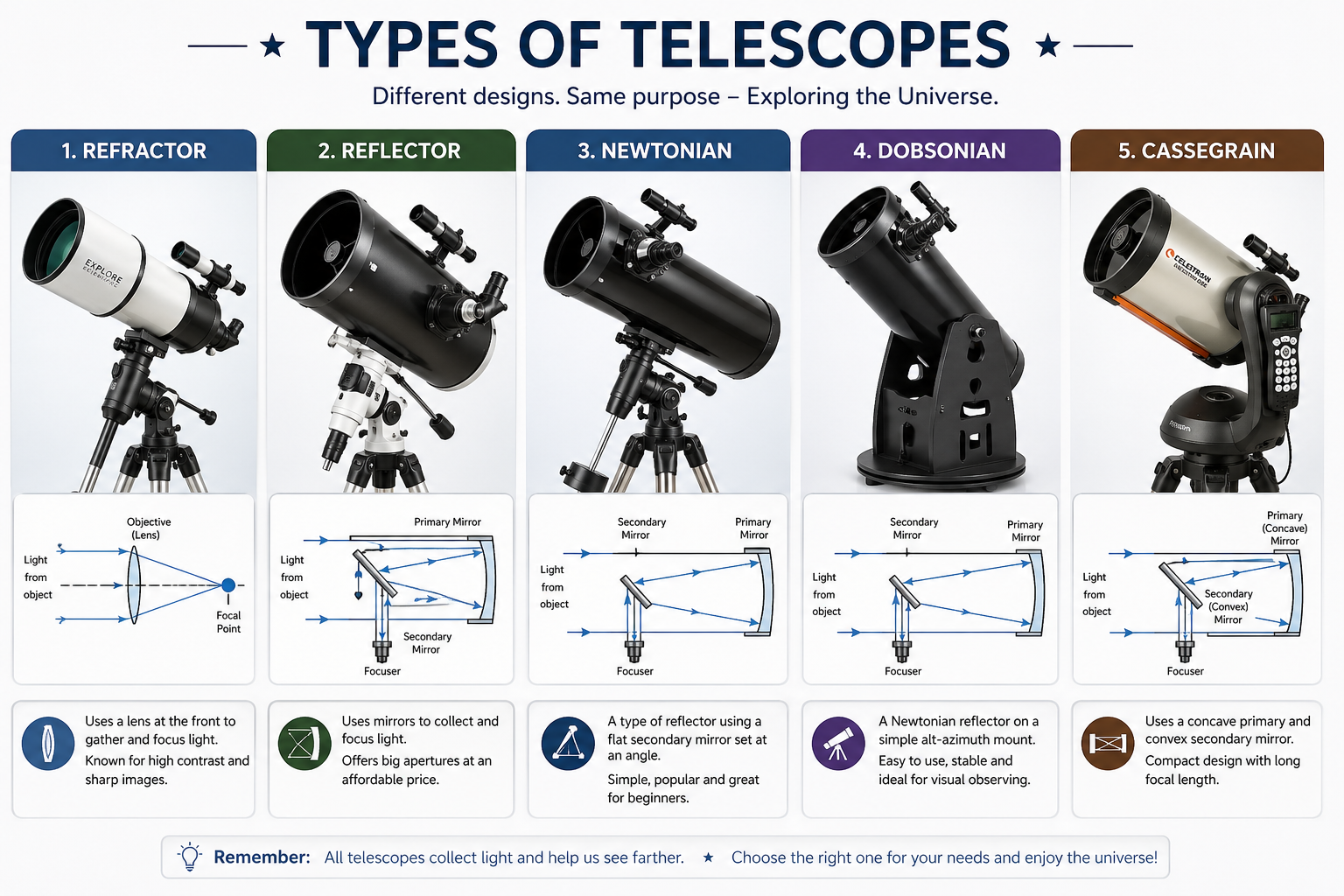
A refractor telescope uses lenses to bend (refract) light and bring it into focus. This is the simplest and most user-friendly telescope design.
Advantages: Sharp and high-contrast images, no need for alignment (collimation-free), Excellent for astrophotography.
Disadvantages: Expensive for larger sizes, Cheap models may show color fringing.
Best for: Nebula and galaxy imaging, Wide-field astrophotography.
2. Reflector Telescope (Mirror-Based)
Reflector telescopes use mirrors instead of lenses to collect and focus light.
Advantages: More affordable, no chromatic aberration, Large apertures available.
Disadvantages: Requires regular collimation, Open tube design collects dust.
Best for: Budget astronomy, Deep-sky observation.
3. Newtonian Telescope
The Newtonian telescope, invented by Isaac Newton, is a type of reflector telescope using a primary mirror and a flat secondary mirror.
Advantages: Affordable with large aperture, Good for deep-sky imaging, Fast focal ratio (bright images).
Disadvantages: Needs frequent collimation, Edge distortion (coma).
Best for: Entry-level astrophotography, Deep-sky observation.
4. Dobsonian Telescope
The Dobsonian telescope, popularized by John Dobson, is a Newtonian telescope mounted on a simple alt-azimuth base.
Advantages: Very large aperture for low cost, Easy to use, Excellent for visual observing.
Disadvantages: Not suitable for astrophotography, no automatic tracking.
Best for: Visual observation of galaxies and planets.
5. Cassegrain Telescope (SCT / Maksutov)
Cassegrain telescopes use a combination of mirrors and lenses, folding the light path into a compact design.
Advantages: Compact and portable, Long focal length (great magnification), Excellent for planetary imaging.
Disadvantages: Narrow field of view, Slower for deep-sky imaging.
Best for: Planets and Moon observation.
Final Comparison
Refractor → Best for astrophotography
Newtonian → Budget deep-sky
Dobsonian → Visual only
Cassegrain → Planets and Moon
Conclusion
Each telescope design has its own strengths and weaknesses. If your goal is astrophotography—especially nebula imaging—a refractor is the best choice. For planetary viewing, a Cassegrain telescope excels. Dobsonian telescopes are unbeatable for visual observation, while Newtonians offer a balance between cost and performance.
Clear skies and happy observing…..
အာကာသလေ့လာသူများအတွက် တယ်လီစကုပ်ကို မှန်ကန်စွာရွေးချယ်ခြင်းသည် အရေးကြီးဆုံးဆုံးဖြတ်ချက်များထဲမှ တစ်ခုဖြစ်သည်။ သင်၏ရည်မှန်းချက်သည် ဂြိုဟ်များကြည့်ရှုခြင်းဖြစ်စေ၊ deep-sky object များကို ရှာဖွေခြင်းဖြစ်စေ၊ သို့မဟုတ် လှပသော astrophotography ရိုက်ကူးခြင်းဖြစ်စေ—တယ်လီစကုပ်ဒီဇိုင်းများကို နားလည်ခြင်းက သင့်ကို အကောင်းဆုံးရွေးချယ်မှုကို ပြုလုပ်နိုင်ရန် ကူညီပေးပါသည်။
1. Refractor Telescope (Lens)
Refractor telescope သည် အလင်းကို Lens များဖြင့် မျက်နှာပြင်သို့ ပြန်လှန် (refract) လုပ်ကာ focus လုပ်ပေးသည်။ ဒီဇိုင်းအနည်းဆုံးနှင့် အသုံးပြုရလွယ်ကူဆုံးဖြစ်သည်။
အားသာချက်များ
ပုံရိပ်ရှင်းလင်းပြီး contrast မြင့်
Alignment (collimation) မလိုအပ်
Astrophotography အတွက် အထူးကောင်းမွန်
အားနည်းချက်များ
အရွယ်ကြီးလာသည်နှင့်အမျှ စျေးမြင့်
အနည်းငယ်စျေးသက်သာသောမော်ဒယ်များတွင် အရောင်ပျက်ခြင်း (color fringing) ဖြစ်နိုင်
အသင့်တော်ဆုံး
Nebula နှင့် galaxy ရိုက်ကူးခြင်း
Wide-field astrophotography
2. Reflector Telescope (mirror)
Reflector telescope သည် Lens အစား မှန်များကို အသုံးပြုပြီး အလင်းကို စုဆောင်းပြီး focus လုပ်ပေးသည်။
အားသာချက်များ
စျေးနှုန်းပိုသက်သာ
Chromatic aberration မရှိ
Aperture ကြီးများရရှိနိုင်
အားနည်းချက်များ
Collimation ကို ပုံမှန်ပြုလုပ်ရမည်
Tube ဖွင့်ထားသောကြောင့် ဖုန်ဝင်နိုင်
အသင့်တော်ဆုံး
Budget astronomy
Deep-sky observation
3. Newtonian Telescope
Newtonian telescope သည် Isaac Newton မှ တီထွင်ခဲ့သော reflector အမျိုးအစားတစ်ခုဖြစ်ပြီး primary mirror နှင့် flat secondary mirror ကို အသုံးပြုသည်။
အားသာချက်များ
Aperture ကြီးပြီး စျေးသက်သာ
Deep-sky imaging အတွက် ကောင်းမွန်
Fast focal ratio (ပုံရိပ်ပိုတောက်ပ)
အားနည်းချက်များ
Collimation မကြာခဏ လိုအပ်
Edge distortion (coma) ဖြစ်နိုင်
အသင့်တော်ဆုံး
Entry-level astrophotography
Deep-sky observation
4. Dobsonian Telescope
Dobsonian telescope သည် Newtonian telescope ကို simple alt-azimuth mount ပေါ်တွင် တပ်ဆင်ထားသော ဒီဇိုင်းဖြစ်ပြီး John Dobson မှ လူကြိုက်များအောင် ပြုလုပ်ခဲ့သည်။
အားသာချက်များ
စျေးသက်သာပြီး aperture အလွန်ကြီး
အသုံးပြုရလွယ်ကူ
Visual observation အတွက် အထူးကောင်း
အားနည်းချက်များ
Astrophotography အတွက် မသင့်တော်
Automatic tracking မရှိ
အသင့်တော်ဆုံး
Galaxy နှင့် planet များကို မျက်စိဖြင့်ကြည့်ရှုခြင်း
5. Cassegrain Telescope (SCT / Maksutov)
Cassegrain telescope သည် မှန်နှင့် Lens တို့ကို ပေါင်းစပ်အသုံးပြုပြီး အလင်းလမ်းကြောင်းကို ချုံ့ထားသော compact ဒီဇိုင်းဖြစ်သည်။
အားသာချက်များ
အရွယ်သေးငယ်ပြီး သယ်ဆောင်ရလွယ်
Focal length ရှည် (magnification မြင့်)
Planetary imaging အတွက် အထူးကောင်း
အားနည်းချက်များ
Field of view ကျဉ်း
Deep-sky imaging အတွက် နှေး
အသင့်တော်ဆုံး
ဂြိုဟ်များနှင့် လ၏ကြည့်ရှုခြင်း
နောက်ဆုံးနှိုင်းယှဉ်ချက်
Refractor → Astrophotography အတွက်အကောင်းဆုံး
Newtonian → Budget deep-sky
Dobsonian → Visual only
Cassegrain → Planets နှင့် Moon
သတ်မှတ်ချက်
တယ်လီစကုပ်အမျိုးအစားတိုင်းတွင် အားသာချက်နှင့် အားနည်းချက်များ ရှိကြသည်။ သင်၏ရည်မှန်းချက်သည် astrophotography—အထူးသဖြင့် nebula ရိုက်ကူးခြင်းဖြစ်ပါက Refractor နဲ့ Reflector သည် အကောင်းဆုံးရွေးချယ်မှုဖြစ်သည်။ Planet ကြည့်ရှုခြင်းအတွက် Cassegrain သည် သင့်တော်ပါသည်။ Dobsonian သည် visual observation အတွက် သူ့ကိုဘယ်သူမှမယှဉ်နိုင်သလို Newtonian သည် စျေးနှုန်းနှင့် performance အကြားချိန်ညှိမှုအတွက် သင့်တော်သော scope တစ်ခုအဖြစ်တည်ရှိနေပါသည်။
မိုးသားကင်းစင်ကြည်လင်သောညများ ဖြစ်ပါစေ — အမြင်ကောင်းများနှင့် အောင်မြင်သော observation များရရှိပါစေ.....