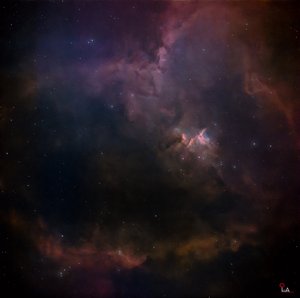
Why Does This Nebula Glow Lavender? The Science Behind the Lavender Colors in Space
The lavender or purple color in this image is not the actual color your eyes would see in space. It comes from the way astrophotographers process narrowband data.
Why does it appear lavender?
This image looks like it was created using the Pseudo-SHO palette (often called the Hubble palette) editing.
Where:
Sulfur-II (SII) → mapped to red
Hydrogen-alpha (Hα) → mapped to green
Oxygen-III (OIII) → mapped to blue
When these channels are combined:
Regions containing both hydrogen and oxygen can blend into purple or lavender.
Gold/yellow clouds come from hydrogen and sulfur.
Bluish-white areas indicate strong oxygen emission.
In your image specifically:
The lavender-pink nebula clouds are likely regions where oxygen and hydrogen emissions overlap after processing.
The bright shell around the central object contains strong OIII emission, which mixes with other channels and creates the pale violet appearance.
The colors are enhanced to reveal structures and chemical composition, not to reproduce natural visual colors.
If you were actually there, your eyes would probably see:
Mostly dim gray or faint reddish tones.
No vivid lavender or golden colors, because nebulae are too faint for human color vision at those brightness levels.
So the lavender color is essentially a scientific color mapping and artistic enhancement that helps astronomers and astrophotographers distinguish different gases and structures within the nebula. It is one of the reasons narrowband images often look so dramatic and beautiful.
Clear skies and happy observing…..
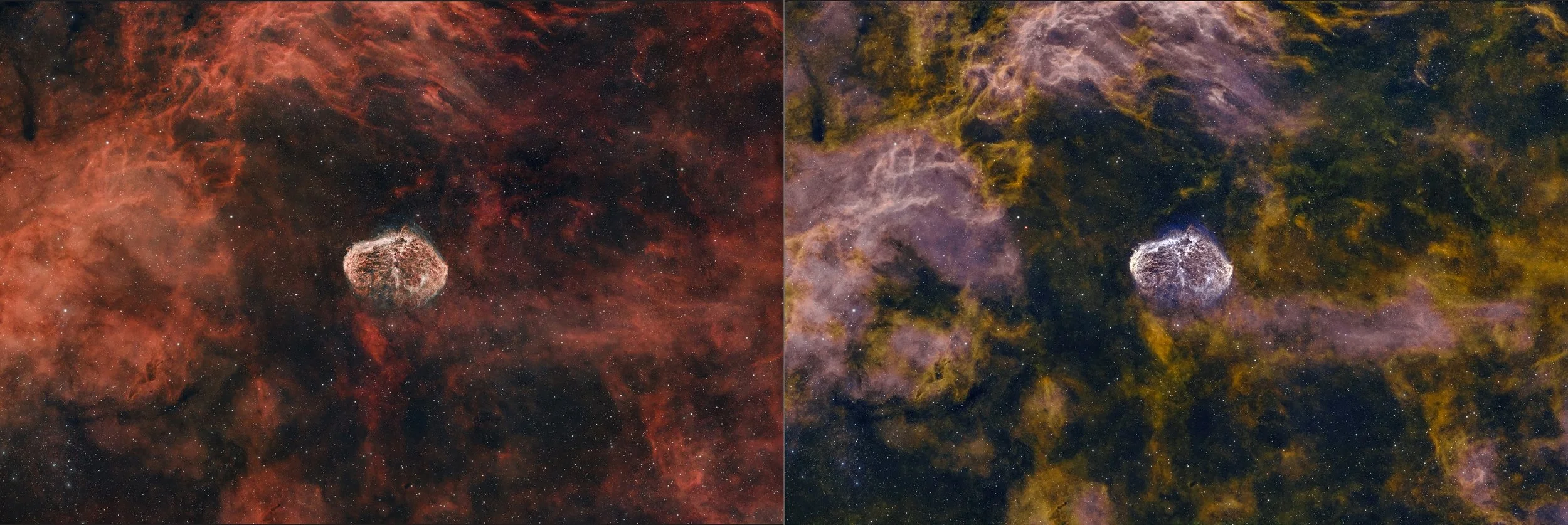
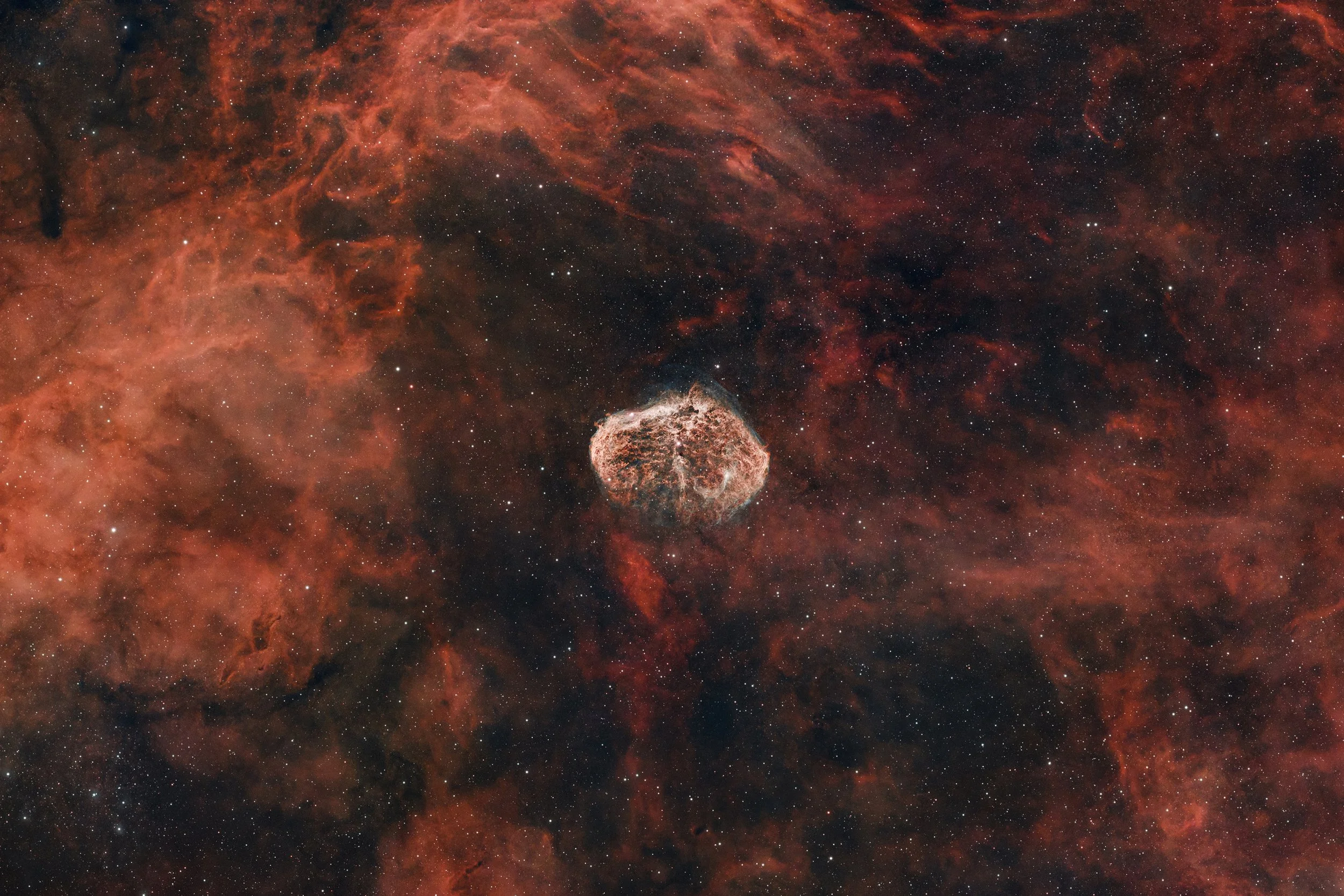
Natural Color Editing
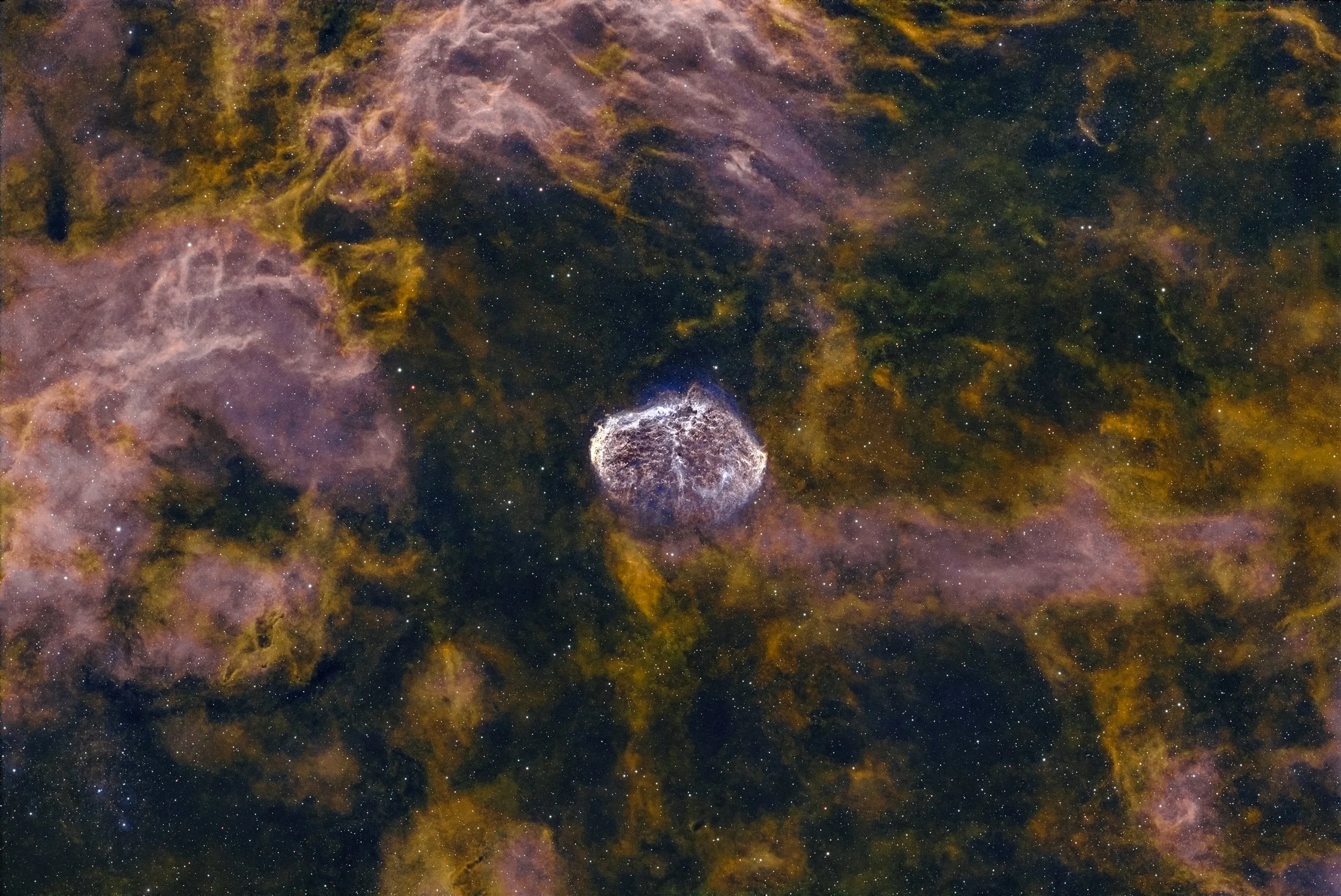
Pseudo-SHO Style Editing
ဒီပုံထဲမှာ မြင်ရတဲ့ လာဗင်ဒါ (ခရမ်းဖျော့) အရောင် က အာကာသထဲမှာ လူ့မျက်စိနဲ့ တိုက်ရိုက်မြင်ရမယ့် အရောင်မဟုတ်ပါဘူး။ အဲဒီအရောင်ဟာ အာကာသဓာတ်ပုံဆရာတွေက narrowband imaging နည်းလမ်းနဲ့ ရိုက်ကူးပြီး အချက်အလက်တွေကို အရောင်အဖြစ် ပြန်လည်သတ်မှတ် (color mapping) လုပ်ထားတာကြောင့် ဖြစ်ပါတယ်။
ဘာကြောင့် လာဗင်ဒါအရောင် ပေါ်လာတာလဲ?
ဒီပုံဟာ Pseudo-SHO palette (Hubble palette) editing ကို အသုံးပြုထားတဲ့ပုံ ဖြစ်ပါတယ်။
အဲဒီနည်းမှာ -
Sulfur-II (SII) ကို → အနီရောင်
Hydrogen-alpha (Hα) ကို → အစိမ်းရောင်
Oxygen-III (OIII) ကို → အပြာရောင် အဖြစ် သတ်မှတ်ထားပါတယ်။
ဒီအရောင်တွေ ပေါင်းစပ်တဲ့အခါ -
ဟိုက်ဒရိုဂျင်နဲ့ အောက်ဆီဂျင် ဓာတ်ငွေ့တွေ အတူရှိတဲ့နေရာတွေမှာ ခရမ်းရောင် သို့မဟုတ် လာဗင်ဒါရောင် ပေါ်လာနိုင်ပါတယ်။
ရွှေဝါရောင် တိမ်တန်းတွေကတော့ ဆာလဖာနဲ့ ဟိုက်ဒရိုဂျင် ဓာတ်ငွေ့များကို ဖော်ပြတာပါ။
အပြာဖျော့ သို့မဟုတ် ဖြူပြာရောင်နေရာတွေက Oxygen-III ဓာတ်ငွေ့ အားကောင်းတဲ့ နေရာတွေပါ။
ဒီပုံထဲမှာတော့ -
မြင်ရတဲ့ ခရမ်းဖျော့-ပန်းရောင် nebula တိမ်တန်းများ ဟာ ဟိုက်ဒရိုဂျင်နဲ့ အောက်ဆီဂျင် ထုတ်လွှတ်မှုတွေ ပေါင်းစပ်ထားတာကြောင့် ဖြစ်ပါတယ်။
အလယ်ဗဟိုရှိ တောက်ပတဲ့ အဝိုင်းပုံ shell မှာ Oxygen-III အများအပြား ပါဝင်နေပြီး အခြားအရောင်များနဲ့ ရောနှောကာ လာဗင်ဒါရောင် ဖြစ်လာတာပါ။
ဒီအရောင်တွေကို အမှန်တကယ် မြင်ရတဲ့အတိုင်း မဟုတ်ဘဲ၊ ဓာတ်ငွေ့အမျိုးအစားနဲ့ ဖွဲ့စည်းပုံတွေကို ပိုမိုရှင်းလင်းစွာ ဖော်ပြနိုင်ဖို့ အတွက် အထူးပြုထားတာပါခင်ဗျ။
အကယ်၍ အဲဒီနေရာမှာ တကယ်ရောက်နေမယ်ဆိုရင် လူ့မျက်စိနဲ့ မြင်ရမယ့်အရောင်က -
အများအားဖြင့် မီးခိုးရောင်ဖျော့ သို့မဟုတ် အနီရောင်ဖျော့ လောက်သာ ဖြစ်နိုင်ပါတယ်။
ဒီလို တောက်ပတဲ့ လာဗင်ဒါရောင်၊ ရွှေရောင်တွေကို မမြင်ရနိုင်ပါဘူး။ ဘာဖြစ်လို့လဲဆိုတော့ Nebula တွေက လူ့မျက်စိအတွက် အလွန်ဖျော့လွန်းတဲ့အတွက် ဖြစ်ပါတယ်။
ထို့ကြောင့် ဒီလာဗင်ဒါရောင်ဟာ ဓာတ်ငွေ့အမျိုးအစားတွေကို ခွဲခြားဖော်ပြဖို့ အသုံးပြုတဲ့ သိပ္ပံဆိုင်ရာ color mapping နဲ့ ဓာတ်ပုံပြုပြင်မှုကြောင့် ဖြစ်လာတဲ့ အရောင် ဖြစ်ပြီး၊ အာကာသဓာတ်ပုံတွေကို အလွန်လှပပြီး စိတ်ဝင်စားဖွယ် ဖြစ်စေတဲ့ အချက်တစ်ခုလည်း ဖြစ်ပါတယ်ခင်ဗျ.....
မိုးသားကင်းစင်ကြည်လင်သောညများ ဖြစ်ပါစေ — အမြင်ကောင်းများနှင့် အောင်မြင်သော observation များရရှိပါစေ.....